.svg)
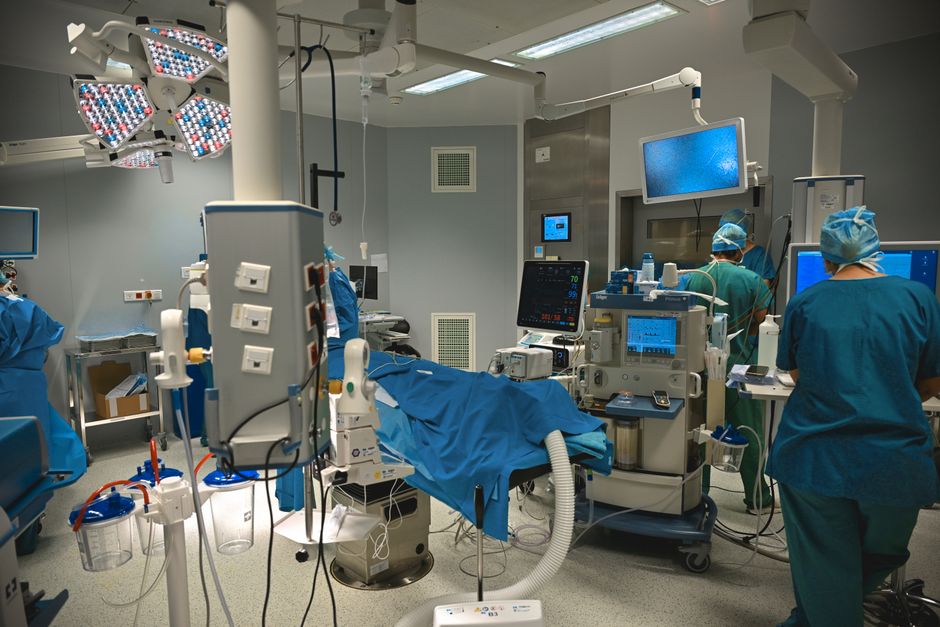
Stopping benzodiazepines on your own, whether by cutting a dose too fast or quitting cold turkey, can be far more dangerous than people expect. This is one of the biggest reasons benzodiazepine withdrawal seizure risk hospital treatment exists as its own category of care. Unlike withdrawal from many other substances, benzodiazepine withdrawal can affect the central nervous system severely enough to cause seizures, confusion, and other complications that need immediate medical attention. In Pennsylvania, when that risk is present, the safest setting is often ASAM Level 4 medically managed intensive inpatient care, a hospital-based level of treatment with 24-hour nursing and daily physician oversight.
Valley Forge Medical Center (VFMC) in Norristown provides this level of care for people whose withdrawal or co-occurring medical needs can't be safely managed anywhere else. Here's what that actually means, and how to recognize when it applies to you or someone you love.
When You're No Longer Safe at a Lower Level of Care
Pennsylvania treatment providers, case managers, and insurers generally use the ASAM Criteria, a national framework for matching people to the right intensity of addiction treatment. It looks at six dimensions, including how dangerous your withdrawal or intoxication might be, what other medical conditions you have, your mental and emotional state, how ready you are for change, your risk of relapse, and how stable or unstable your living environment is. Based on those dimensions, care is organized into "Levels of Care," ranging from outpatient counseling up through intensive outpatient, residential treatment, medically monitored detox, and finally ASAM Level 4, the highest and most closely supervised level in the entire continuum.
So how do you know if you or someone you love has moved past what outpatient or residential care can safely handle? A few signs tend to show up:
When any of these are present, it usually means the body's nervous system has become physically dependent in a way that makes unsupervised or lightly supervised withdrawal genuinely risky. Here's what's happening underneath: benzodiazepines calm the brain by boosting the effect of a natural chemical called GABA, which slows down nerve activity. Used long enough, the brain adjusts and starts relying on that outside support to stay regulated. Take the substance away too fast, and the brain's own "brakes" are suddenly gone. Nerve activity can spike quickly, and in some people that spike is severe enough to trigger a seizure or a state of dangerous overstimulation.
Withdrawal crosses into medical emergency territory when the body can no longer regulate itself safely on its own. That might look like a seizure, a period of severe agitation or hallucination, or vital signs that swing outside a safe range. At that point, outpatient counseling or even a residential program without onsite medical staff isn't equipped to respond fast enough. This is exactly the gap ASAM Level 4 is built to close: continuous nursing observation, a physician available around the clock, and the ability to intervene the moment something changes. Once you're medically stable, the ASAM Criteria call for stepping back down to a lower, less intensive level of care, so Level 4 is meant to be a bridge, not a permanent placement.
How Benzodiazepines and Similar Substances Affect the Body and Mind
Benzodiazepines are prescribed for anxiety, insomnia, and seizure disorders because they slow down an overactive nervous system. In the short term, that can feel like relief. Used regularly over weeks or months, though, the body adapts to a slowed baseline, and needs the substance just to feel normal. Alcohol works on some of the same brain pathways, which is part of why combining the two is particularly risky and why withdrawal from either one, or both together, can affect the body in similar dangerous ways. According to the Substance Abuse and Mental Health Services Administration (SAMHSA), withdrawal from central nervous system depressants like alcohol and benzodiazepines is among the withdrawal syndromes that can become medically serious and should be evaluated by a medical professional rather than managed alone.
When Substance Use Collides with Existing Health Conditions
Substance use rarely happens in isolation from the rest of someone's health. If you already live with a seizure disorder, heart arrhythmia, liver disease, or a psychiatric condition like bipolar disorder or schizophrenia, benzodiazepine or alcohol withdrawal can interact with that condition in ways that are hard to predict. A pre-existing anxiety disorder can make withdrawal-related agitation feel unbearable. A heart condition can make withdrawal-related spikes in heart rate genuinely dangerous rather than just uncomfortable. This is one of the reasons the ASAM Criteria weigh biomedical and psychiatric conditions as their own separate dimensions. Co-occurring conditions don't just complicate treatment, they often change what level of care is safe in the first place, which is why VFMC's approach integrates medical and psychiatric care rather than treating substance use on its own.
How Medication Misuse Can Spiral Quickly
Not everyone who ends up needing hospital-level detox set out to misuse anything. Someone might be prescribed a benzodiazepine for legitimate anxiety or sleep problems, then gradually increase the dose on their own because the original amount stops working as well, a pattern sometimes called tolerance. Others run out of medication early and go without for days, unintentionally triggering withdrawal. Mixing a prescribed benzodiazepine with alcohol or another sedative, even occasionally, can also push the body past what it can safely regulate. None of this requires intent to misuse anything. It just requires the nervous system adapting to a substance faster than a person realizes, until stopping or cutting back suddenly becomes far riskier than it would have been earlier on.
When the ER Isn't Enough and Rehab Access Is Delayed
A common and frustrating pattern in Pennsylvania right now involves people being discharged from an emergency room while they still meet the medical criteria for inpatient care, simply because no inpatient bed was available at that moment. Others are medically stable enough to leave the ER but not stable enough to go home safely, and they get stuck waiting for a residential or detox bed to open up. Pennsylvania's behavioral health system, including Medical Assistance managed care and the framework maintained by the PA Department of Drug and Alcohol Programs (DDAP), is built to route people toward the right Level of Care, but access can still be delayed by bed availability, insurance authorization steps, or timing. This bottleneck is part of why hospital-based programs like VFMC exist: to provide a direct, licensed pathway into ASAM Level 4 care without a prolonged wait, and to admit people whose needs have outgrown what an ER visit or a lower level of care can address. You can learn more about how that intake works on VFMC's treatment process page.
If you're trying to figure out whether a loved one's situation has crossed the line into needing this level of care, it's reasonable to feel unsure. Withdrawal risk isn't always obvious from the outside, and it can change quickly. That uncertainty is exactly why a clinical evaluation, not guesswork, should guide the decision. VFMC's Norristown hospital is set up to make that evaluation and move quickly when medically managed inpatient care is the safest option.
This content is for educational purposes only and is not a substitute for professional medical advice. If you or someone you know is in crisis, call 988 or your local emergency number.
To talk with our admissions team, start here or call (610) 539-8500. If you or someone you know is in crisis, call or text 988 anytime.